When the snowy peaks of the Himalayas succumb to the ravages of winter and the temperature drops well below zero, then the doors of Kedarnath Dham are closed. The word ‘Kedar’ itself means that area or part of the land which is sacred. ‘Nath’ means God. Kedarnath means Lord of the holy land. There is no sign of life here for almost exactly 181 days and the entire valley area gets wrapped in a white sheet and goes into the sleep of Lord Shiva.
Then when the first rays of summer touch these peaks and the auspicious time of Akshaya Tritiya arrives, the lamp lights up for the first time in the cold and dark sanctum sanctorum and with the sound of the doors opening, Lord Kedarnath once again becomes visible to his devotees. This trend has been going on for thousands of years, but even today every rock and every story of Kedarnath fascinates people. Let us take a look at the story of this mysterious Dham in the explainer, knowing which will give you goosebumps…
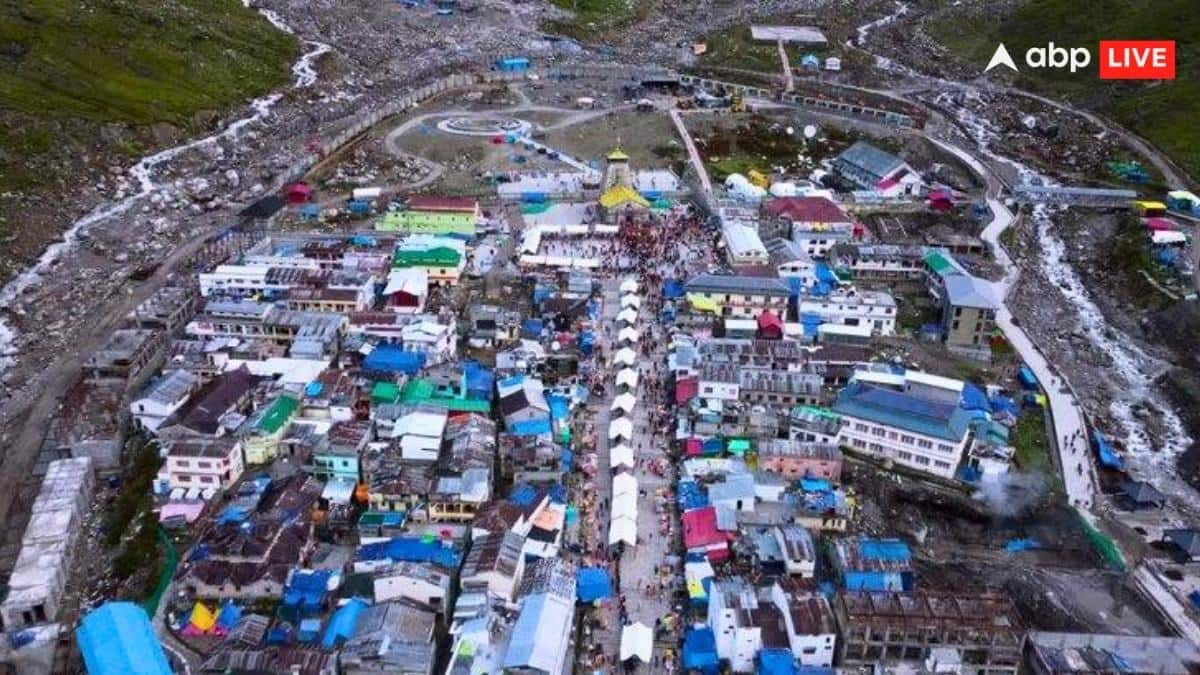
Why is Kedareshwar considered the most special among the 12 Jyotirlingas?
Lord Shiva is worshiped in the form of 12 Jyotirlingas, which include famous temples like Somnath, Mahakaleshwar and Vishwanath, but the dignity of Kedarnath is unique. The biggest reason for this is its location, because it is the only Jyotirlinga in the world which is sitting in the lap of the Himalayas at an altitude of about 11,755 feet (about 3,583 meters) above sea level.

According to the scriptures and mythological beliefs, Lord Shiva loves the Himalayas the most and Kedarnath is his abode closest to nature. This is the reason why the name of Kedarnath is taken first in Sanatan Dharma to attain salvation. It is believed that by meditating in the cool and pure environment of this place, the distance between man and God immediately ends, which cannot be experienced in this amazing form in any other Jyotirlinga, but it would have been destroyed in the disaster that occurred in Uttarakhand in 2013, if a rock had not come and protected it.
How did the temple survive the terrible disaster of 2013?
If we talk about Kedareshwar, memories of the Kedarnath tragedy of 2013 come to the fore. On 16 and 17 June 2013, due to heavy rains and breaking of glacier in Kedarnath and its surrounding areas, such a devastation occurred that the whole world was shocked to see. Mandakini and Saraswati rivers turned destructive and millions of tonnes of dampness, rocks and debris flowed straight towards the temple. The entire Kedarnath market and thousands of people were buried under the debris, but the biggest miracle was seen when the clouds dispersed. This ancient Kedarnath temple, built in the eighth century, was completely safe, while everything around it had been destroyed.
There is a mixed story of both science and faith behind this. Science believes that the structure of the temple is ‘A’ shaped, that is, its roof comes downwards and is pointed at the top. When millions of tonnes of debris and water rapidly hit the temple, this pointed structure split it on both sides and the debris flowed straight towards the river, causing very little pressure on the sanctum sanctorum of the temple.
At the same time, just behind the temple is a huge rock, which acted as a shield and prevented the strong current from hitting the temple directly. The belief of the devotees is even deeper, because they consider this rock to be the form of Bhairavnath, who saved his beloved by standing from behind and as long as Bhairavnath is standing, no disaster can touch Kedarnath.

Interesting History and Engineering of Interlock Cut Stones
When you see Kedarnath temple, you will not see cement, iron bolts or any kind of aggregate (mixture of soil or lime) being used there. According to Britannica, this temple is completely made of large and heavy stones, which have been cut with great precision and interlocked with each other. In today’s language, it has been fitted like ‘Lego blocks’ i.e. connecting toys. This style is considered a wonderful example of North Indian style civic architecture.
Now the question arises that how did this temple, without cement, survive the terrorist earthquakes and severe snowfall for more than 1200 years?
Its secret lies in the cutting of these stones and the small spaces between them. Ancient craftsmen joined these stones in such a way that when an earthquake occurs, these stones slide slightly over each other, due to which the energy of the earthquake is absorbed and the temple trembles slightly instead of breaking.

If there was cement filled between these stones, it would have broken violently in an earthquake and the temple would have collapsed. Similarly, when there was water pressure in 2013, since there was no solid girder in the temple, the water could not enter inside it and create pressure and simply flowed out from outside. This is such a miracle of ancient Indian engineering that even today’s modern science salutes it.
But how and when was the temple built?
The history of Kedarnath is considered older than Mahabharata. According to Chardham Pilgrim Tour, the story goes that after the Mahabharata war, the Pandavas felt it a big sin to kill their own family members. He needed the blessings of Lord Shiva to get freedom from this sin, but Shiva was angry with the Pandavas. To escape from them, Shiva moved away from Kashi towards Kailash and then took the form of a bull in Guptkashi. When the Pandavas recognized him, Bhima caught hold of the bull with his strength, but the bull started sinking into the earth.
In this collapse, the upper part (hump) of the bull appeared in Kedarnath, the arms (hands) in Tunganath, the mouth (stomach) in Rudranath, the navel (stomach) in Madyamaheshwar and the hair (hair) in Kalpeshwar. In this way, Pandavas worshiped Shiva by building temples at these five places, which are today known as ‘Panch Kedar’.
After this, for a long time this temple collapsed and got buried in the earth due to snowfall and earthquakes. Turning the pages of history, when the great philosopher and saint Adi Shankaracharya traveled to the Himalayas in the eighth century, he found the remains of this structure of Kedarnath. He performed severe penance for Lord Shiva and Shiva appeared and blessed him.
Then Adi Shankaracharya rebuilt this structure and re-erected this temple in the same ancient interlocking style that we see today. After this, Shankaracharya himself appointed Namboodiri Brahmins who came from Kerala in South India for worship here, who are still following the same hereditary tradition.

This story is not just about a temple, but it is a testimony to the amazing heritage of Indian civilization, where superstition is kept aside and such a unique confluence of science, engineering and faith is seen which forces even thousands of years of destruction to bow before it. Whenever you visit Kedarnath, just touch the walls of that temple and try to think how many stories these stones hold.