In the politics of Bihar, the name of Muslims is often taken as ‘decisive vote bank’, but the figures say something else. Despite having 17.7% share in the total population of the state, Muslims are getting negligible space in the assembly. A record 34 Muslim MLAs were elected in 1985, only 19 were left in 2020.
So let us understand in ABP Explainer how the graph of Muslim candidates kept falling in the politics of Bihar, how important Muslim votes are to win the elections and what will be the position of Muslims in the upcoming elections…
Question 1- What is the population of Muslims in Bihar and what effect does it have on politics?
answer- According to the Bihar Caste Survey of 2023, the total population of Bihar is 13.07 crores. In this, Muslims are 17.7% i.e. 2.31 crores. Muslims play a big role in politics. There are 243 assembly seats in Bihar, out of which the population of Muslims is more than 20% in 87 seats and 15-20% in 47 seats. Especially in Seemanchal areas like Kishanganj, Purnia, Katihar and Araria, 40-70% are Muslims. There are 24 seats here and it is from here that victory or defeat in the elections is decided.
Overall, Muslims are decisive voters on 60 seats. RJD’s MY (Muslim-Yadav) formula works on this. There are Muslim dominated areas in Seemanchal, where parties like AIMIM are becoming stronger. But Muslims get less tickets, so they have a vote bank but no share in power.
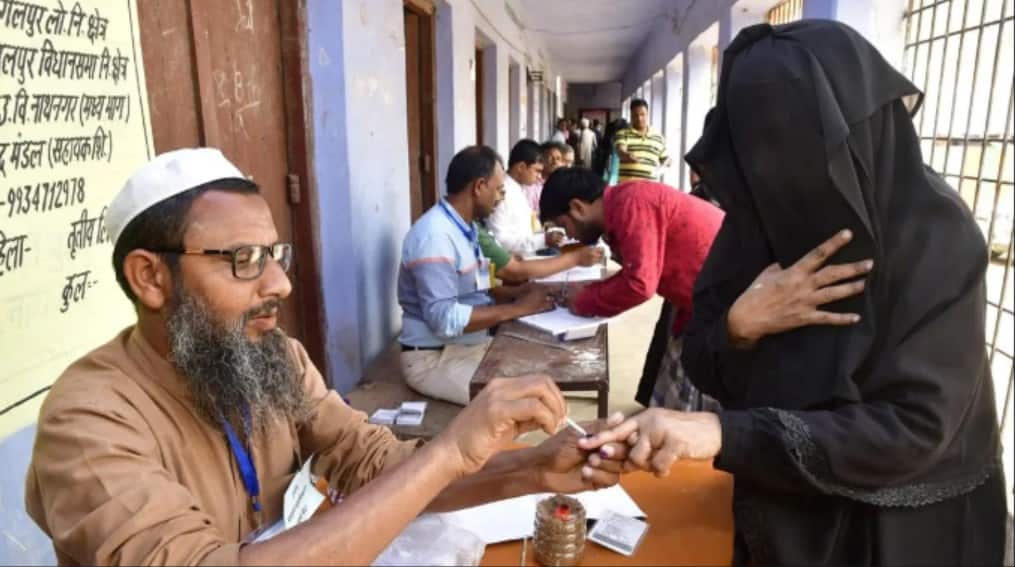
Question 2- How did the number of Muslim MLAs in the Assembly decrease from 1952 to 2020?
answer- There were 17 assembly elections in Bihar from 1952 to 2020. A total of 390 Muslim MLAs were elected. In 1985, the maximum number of 34 Muslim MLAs were elected. The decline started after 1990, but there was a slight improvement in 2000 during RJD’s tenure. In 2020, 19 Muslims became MLAs, which included RJD (8), AIMIM (5) and Congress (4).
| Year | Muslim MLA | total seats |
Percentage (%)
|
| 1952 | 23 | 323 | 7.0 |
| 1957 | 22 | 318 | 6.9 |
| 1962 | 20 | 318 | 6.3 |
| 1967 | 25 | 318 | 7.9 |
| 1969 | 20 | 318 | 6.3 |
| 1972 | 26 | 318 | 8.2 |
| 1977 | 22 | 324 | 6.8 |
| 1980 | 28 | 324 | 8.6 |
| 1985 | 34 | 324 | 10.5 |
| 1990 | 19 | 324 | 5.9 |
| 1995 | 23 | 324 | 7.1 |
| 2000 | 30 | 324 | 9.3 |
| 2005 (February) | 24 | 243 | 9.9 |
| 2005 (October) | 16 | 243 | 6.6 |
| 2010 | 19 | 243 | 7.8 |
| 2015 | 24 | 243 | 9.9 |
| 2020 | 19 | 243 | 7.8 |
Question 3- Why has Muslim representation decreased in the last 73 years?
answer- According to political experts, there are 5 major reasons for decreasing Muslim representation…
1.Ticket Politics: Political parties with Muslim candidates only are Muslim-majority seats But she takes it off. miscellaneous seats But to keep Hindu voters happy, they do not give tickets to Muslims. in 2020 JDU mixed with seats But 11 Muslim candidates were fielded, but all of them lost. secular Parties deny tickets to Muslims, especially in areas like Magadha.
2. Fear of Hindu polarization: BJP’s Hindutva strategy scares parties into taking away Hindu votes from Muslim candidates One Will go aside. NDA parties involved in JDU And LJP Muslims issue tickets. Caste after Mandal Commission in 1990 focus increased, but 2005 (october, NDA Muslim MLAs fell to 16 in the elections. in 2020 NDA For the first time there is not a single Muslim in the government MLA Was not. BJP won 74 seats, but Muslims 0.
3. Alliance conflicts and vote-harvesting: in 2015 grand alliance sent 24 Muslim MLAs from all the equations, but in 2020 AIMIM Won 5 seats and lost votes at other places. 85% Muslims Pasmanda (Ansari and Qureshi), but tickets are given to upper caste Muslims. That means only 7 Muslim castes get tickets. Coalition change and vote split Muslim representation decreased in 2010-2020.
4. Historical disillusionment, 1989 Bhagalpur More than 1000 Muslims died in the riots, after which Congress disillusionment Done. Muslim population went towards RJD, but Lalu-Nitish in the round MY The equation was only taking votes, not MLAs.
5. Regional Imbalance: Seemanchal of 24 seats But Muslim MLAs are fine, but Magadha’s 26 seats But since 2010, not a single Muslim has become an MLA. Patna, Gaya and Nalanda like assembly seats But there has been no Muslim MLA for years.
Question 4- How many Muslim candidates did the parties field in the 2025 elections?
answer- The 2025 elections will be held from November 6 to November 11 and the results will come on November 14. This time only 36 Muslim candidates have contested, whereas according to the population there should have been 44.
NDA has fielded only 5 Muslim candidates out of 243 assembly seats. JDU gave tickets to only 4 Muslim candidates in the candidates for 101 seats. BJP and HAM did not give ticket to even a single Muslim candidate. LJP(RV) has fielded a Muslim candidate. Whereas the Grand Alliance has fielded 30 Muslim candidates out of 243. These include 18 Muslim candidates from RJD, 10 from Congress and 2 from CPI(ML). AIMIM gave tickets to 25 Muslim candidates and Jan Suraj to 21 Muslim candidates.
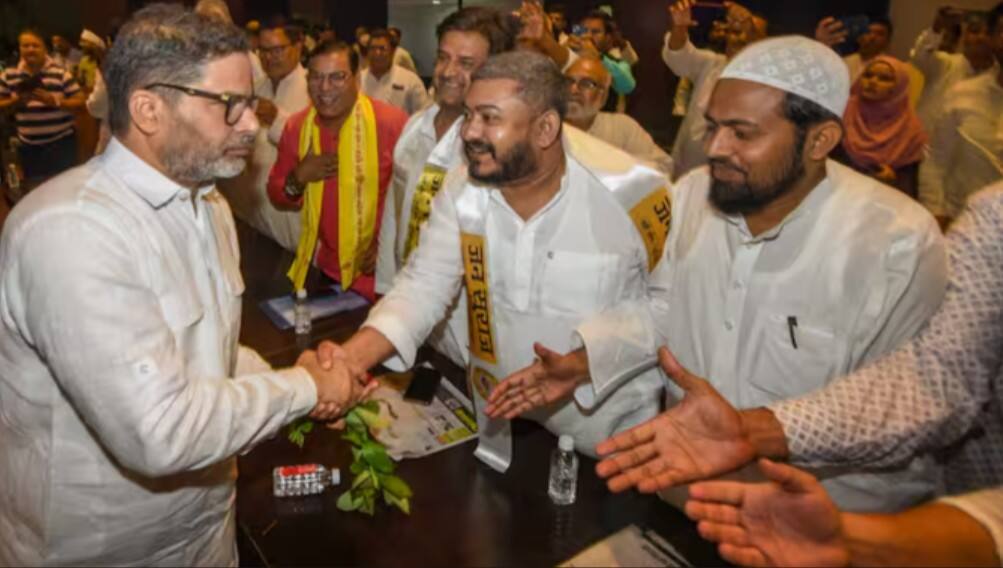
Question 5- How can Muslims vote in the 2025 elections?
answer- Political experts believe that this time most of the Muslim votes will go to the Grand Alliance. But AIMIM and Jan Suraj can cut votes. Jan Suraj has also promised to field 40 Muslim candidates. Harry Blair of Harvard University writes in his book Minority Electoral Politics, ‘Muslims vote due to local dynamics.’ This means that if polarization increases, small Muslim parties like AIMIM may benefit.