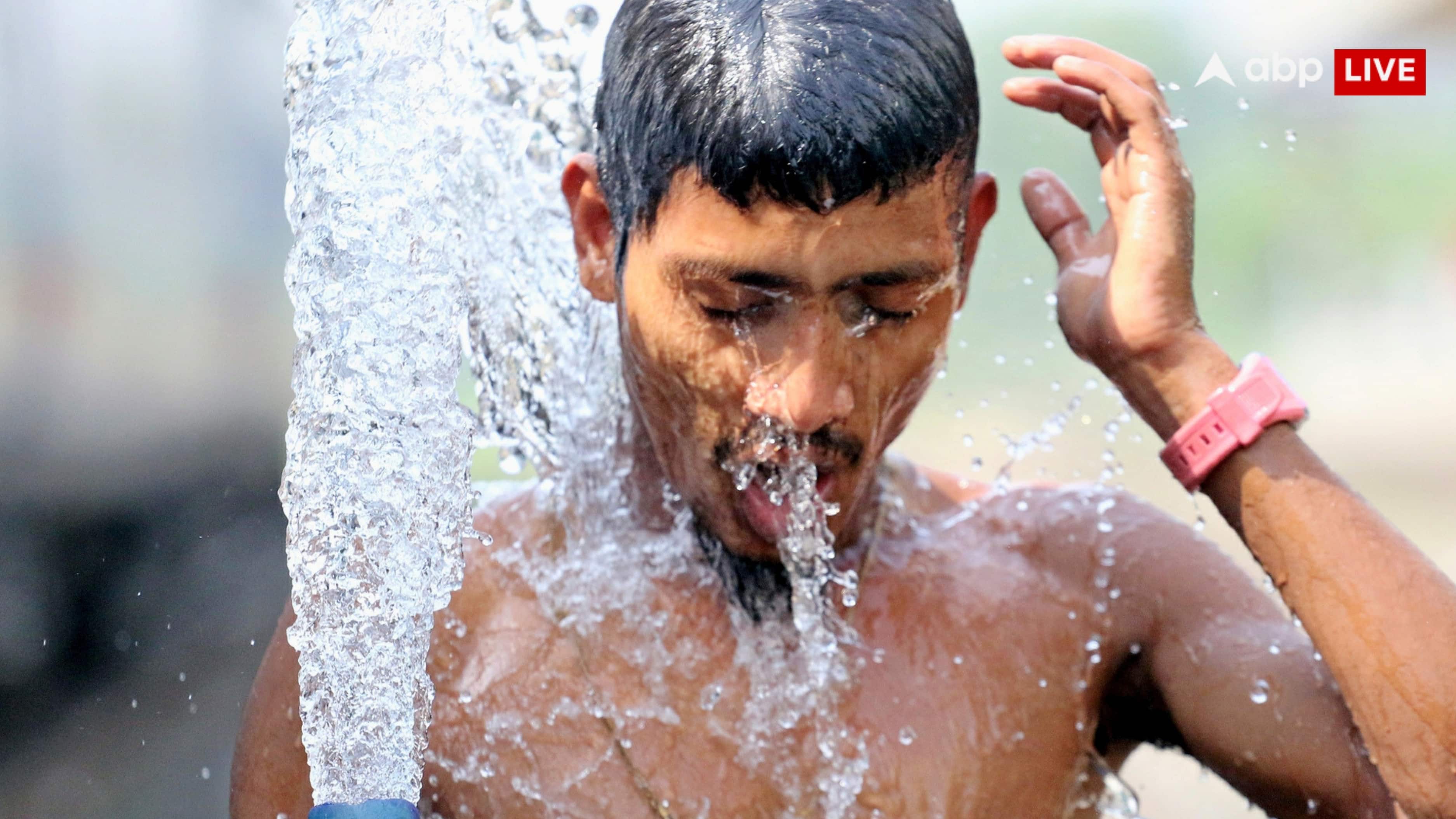
A few days ago the country was drenched in unseasonal rain and now it is scorching heat. The Meteorological Department has predicted scorching heat for the next 5-6 days, but in the meantime, humid heat has become another big problem. Humid heat is becoming the most dangerous form of climate change in India. This is a very dangerous combination of high temperature and high humidity, enough to torture and kill. How? Know in the explainer…
Question 1: How much is the heat burning across the country?
answer: In April 2026, the heat in Delhi and North India has broken records. The Meteorological Department (IMD) has warned that heat wave will prevail in many areas including Haryana, Chandigarh, Delhi, Punjab and Chhattisgarh for the next 4-5 days. At some places the temperature can reach 45 degrees Celsius. The maximum temperature recorded in Prayagraj on April 20 was 44.4 degrees. 44 degrees in Varanasi, 40-43 degrees in Kanpur-Gorakhpur-Jhansi-Agra. The average maximum temperature in Delhi in March 2026 reached 32.6 degrees, which is 2.6 degrees more than 30 degrees in 2011. Delhi’s March temperature has increased by 2.6 degrees Celsius in 15 years.
Monsoon does not come in April, yet the pre-monsoon humidity is increasing. There is a danger of hot and humid weather in Ganga-coastal Bengal, Jharkhand, Odisha, Eastern UP till April 26. Now not just temperature but also humidity temperature has become the biggest threat.

Question 2: What is ‘humid heat’ and why is it more dangerous than heat wave?
answer: Humid summer means high humidity with hot air. In dry heat, sweat dries quickly and the body becomes cool, but in humid heat, sweat does not dry at all. The cooling system of the body fails, the internal temperature of the body starts increasing and heatstroke can occur within a few hours. Scientists measure it with ‘wet-bulb temperature’. If it reaches 35 degrees Celsius, even a healthy person sitting in the shade is in mortal danger within 6 hours.
A study published in the journal Climate Dynamics. The research led by Akshay Deoras of the University of Reading, UK, analyzed more than 80 years of weather data. According to this, the biggest threat in India now is ‘humid heat’ and not just dry heat. The south-west monsoon is its biggest controller. Kerala is at the forefront. Here, along with the days, the nights are also getting hotter. The study says that by seeing the monsoon pattern 4 weeks in advance, warning of humid heat wave can be given.
- In active phase of monsoon: In North India the risk of humid heat wave increases to 125% of normal.
- In the break phase of monsoon: Kerala and South India are most in danger.
Question 3: Is it fatal and what should be done to avoid it?
answer: According to a journal study, normal temperature with excess humidity can become fatal. In the active phase of monsoon in North India, the risk of humid heat increases up to 125% of normal. Earlier people used to move only by looking at the temperature, but now it has come to light that even in temperatures below 40 degrees, people are falling ill and dying when there is humidity. This is the most hidden and deadly form of climate change.
Down to earth and according to experts, humid heat can be avoided by taking 7 precautions…
- Keep track of time: Go out as little as possible between 12 noon to 4 pm. If you have to work, take rest in the shade for 10-15 minutes frequently.
- Water and Electrolytes: Drink plenty of water throughout the day. Take ORS, salt-sugar solution, lemon water, coconut water or curd-lassi. Your urine should be light yellow, if it is dark then understand that water is decreasing.
- Choice of clothes: Wear loose, cotton, light colored clothes. Do not wear black or synthetic clothes as they absorb heat. Keep a cap, towel or umbrella on your head.
- Keep home cool: Keep the curtains closed, run the fan and cooler. Let the air come in by opening the windows at night. If there is AC then keep it at 24-26 degrees.
- Keep an eye on the symptoms: Fatigue, dizziness, excessive sweating, high fever, vomiting, muscle pain and unconsciousness are danger signs. If this happens, immediately go to a cool place, drink water and consult a doctor.
- Caring for special people: The elderly, children, pregnant women, those with high BP or diabetes and laborers working in the open are most at risk. Keep good ventilation in the house and check it daily.
- Follow IMD’s warning: In April 2026, IMD has issued a ‘hot and humid’ alert for Kerala, Tamil Nadu, Gujarat coast, Odisha, Gangetic West Bengal from 20-26 April. Keep checking local weather app or news.
Finally, know that humid heat is not normal heat. It burns the body from inside, but if we follow the advice of IMD, water and shade then we can be saved 100%.
Question 4: So when will we get relief from this humid heat?
answer: Humid heat has now become India’s biggest climate threat and is likely to increase even more rapidly. According to scientific studies, it is not just temperature but the combination of humidity and heat that will lead to longer, more dangerous and region-specific heatwaves. In the remaining summer of 2026 itself, IMD warns that there will be more heatwave days than normal in the eastern, central, north-west and south-eastern peninsular areas. Hot and humid weather will continue in coastal areas in April-June 2026. Humidity will increase further during monsoon, due to which the risk of humid heat wave in Northern India may increase by 125%.